
Reviewed · ART NOUVEAU TOURS
Riga’s Architecture: A self-guided audio tour of the city’s art nouveau history
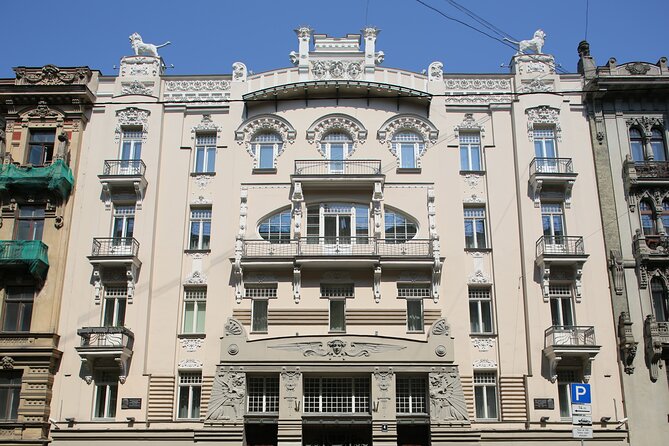
Riga has more than 800 art nouveau buildings, and this compact audio walk takes you straight into the city’s finest display of them. You’ll see the dramatic facades around Alberta iela, learn how to recognize the style, and hear about Mikhail Eisenstein, whose son Sergei later became a major Soviet filmmaker. The route is short and focused, which makes it easy to fit into a busy day.
I like the clear pacing and the freedom to stop for photos without holding up a group. I also like the offline maps and audio, especially if you want to avoid mobile data charges. The main drawback is that this is an app-based tour, not a live walk, so you need your own charged smartphone and headphones, and the purchase cannot be refunded or changed.
Key points before you book
- Six central Riga stops: The route runs from the Latvian National Museum of Art to Alberta iela 12.
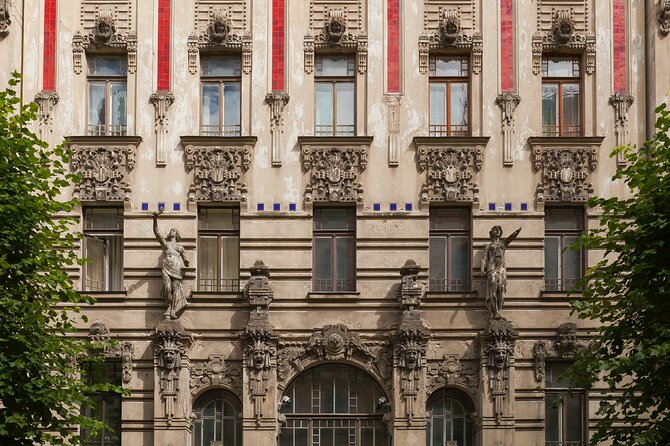
- Mikhail Eisenstein’s ornate work: You’ll examine some of Riga’s most decorative early art nouveau architecture.
- A lesson in spotting style: The narration explains how to identify art nouveau buildings instead of simply pointing them out.
- National Romanticism included: You’ll hear how Latvian architects adapted art nouveau into a more local style.
- Offline access: VoiceMap provides the audio, map, and geodata for use without an internet connection.
- Short, low-cost format: At $5.20, the tour takes about 30 to 45 minutes and suits a tight schedule.
Why Riga is the right city for an art nouveau audio walk
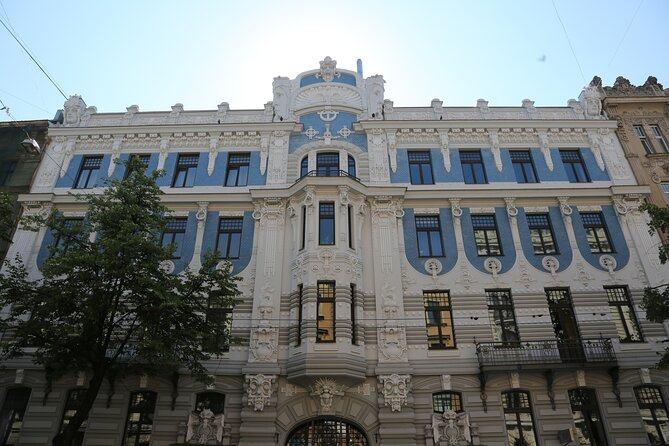
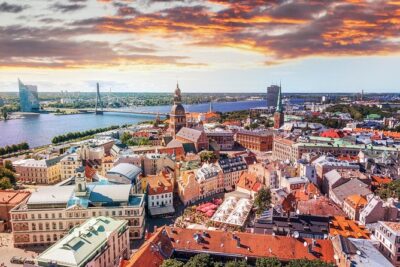
Riga is not a city where you need to hunt for one isolated art nouveau building. The style appears across a large part of the central city, with more than 800 examples. That sheer number gives this tour a useful purpose: it helps you understand what you are seeing instead of reducing the experience to a photo stop.
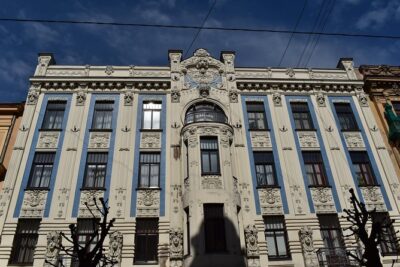
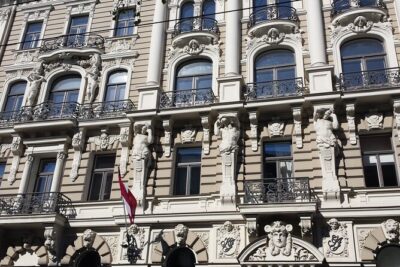
Art nouveau emerged as a decorative style that favored flowing lines, plant forms, unusual faces, dramatic ornament, and close attention to the whole building facade. In Riga, it took several forms. Some buildings are heavily decorated, while others have stronger links to National Romanticism, a more locally grounded approach that used restrained shapes and references to Latvian identity.
The audio format is especially helpful here. You can look upward at a facade while listening, pause when you need a closer look, and replay a section if a name or architectural term passes too quickly. The route is not trying to cover every important building in Riga. Instead, it gives you a manageable introduction to the city’s most famous art nouveau district.
More Art Nouveau walks in Riga
- Riga Art Nouveau walking tour
★ 4.0 · 27 reviews - Old Town And Art Nouveau Walking Tour Of Riga
★ 4.0 · 15 reviews - Small Group Art Nouveau walking tour 2h
★ 4.5 · 6 reviews
Starting at the Latvian National Museum of Art
The tour begins at the Latvian National Museum of Art, at Jaņa Rozentāla laukums 1. This is a practical starting point because you are already near Riga’s central art nouveau district, and the museum gives you a natural place to get your bearings before the facades become the main attraction.
You do not need to enter the museum for this experience. Entrance tickets are not included, and the tour is designed as an exterior route. If you have already visited the museum, the audio walk works nicely as a follow-up because it shifts your attention from paintings and sculpture to the city’s buildings.
At the start, the narration introduces the basic idea of art nouveau and explains what to look for. That introduction matters. Without it, Riga’s decorative buildings can blur into a pleasant sequence of elaborate doorways and windows. With a few visual clues in mind, you can begin comparing the shapes, materials, and ornament from one stop to the next.
The tour lasts roughly 30 to 45 minutes. Your actual time will depend on how often you pause, take photographs, or replay sections. The short length is one of its best features for a first visit, though it also means the treatment stays selective rather than exhaustive.
Elizabetes 10b and the first grand facades
The route next stops briefly at Elizabetes 10b. This address is part of the cluster of famous art nouveau buildings that makes central Riga so rewarding for architecture fans.
The important point here is not simply the address. The stop gives you a chance to put the opening explanation into practice. Look for the relationship between the building’s overall shape and its smaller details. Art nouveau is not just surface decoration added at the end. The windows, entrance, balconies, and facade ornament work together to create a single visual effect.
The audio guide keeps the explanation moving, which helps prevent the familiar problem with architecture tours: too many dates and too much terminology before you have had time to look. One of the strongest qualities of this route is its balance. The information is enough to tell you why a building matters, but it does not turn a short city walk into a lecture.
You may want to pause here for photographs. The tour is private in the sense that only your group participates, but there is no live guide waiting for you. You set the pace, and the app allows you to linger without inconveniencing anyone else.
Alberta 2a and Riga’s decorative language
The next stop is Alberta 2a, placing you deeper into one of Riga’s most recognizable art nouveau streets. Here, the route continues its lesson in reading a building rather than merely admiring it.
The narration draws your attention to the visual language of the facade. Riga’s art nouveau architects used decoration to make apartment buildings feel theatrical and memorable. Faces, curves, geometric patterns, and sculptural elements can appear in places you might overlook if you are focused only on the main entrance.
This is where an audio tour earns its modest price. You can walk through this district and appreciate the buildings on your own, but the explanations give you a reason to slow down and compare them. For $5.20, you are paying less for a long guided event than for a focused layer of context that remains available through the VoiceMap app.
The stop is brief, so do not expect a detailed architectural survey of the entire address. Think of it as one part of a visual progression. Each building adds another example to the larger question: how did Riga make art nouveau its own?
A few more tours worth a look in Riga
- Riga Jewish History Tour
★ 5.0 · 9 reviews - Cesis: Medieval Heritage and Natural Treasures
★ 4.0 · 4 reviews - All Inclusive Honest History Tour – Āraiši, Cēsis, Līgatne, Sigulda
★ 5.0 · 3 reviews
Alberta 4 and the appeal of self-guided timing
Alberta 4 is another short stop along the same concentrated route. The close spacing of these addresses makes the walk efficient. You are not spending most of the time getting from one sight to another, so the audio can focus on architecture instead of directions.
I like this kind of format for Riga because the buildings reward a slow look. You might want to inspect a carved figure, step back to see the full facade, or wait for a clear view before taking a photograph. A fixed group tour can make those small choices feel rushed. With VoiceMap, you can pause the narration and continue when you are ready.
The tradeoff is that no person is there to answer a question. If you want to ask about a detail that catches your eye, you will need to rely on the recorded material or do further research later. The route is best for independent visitors who enjoy setting their own rhythm, not for someone looking for an open conversation with a local guide.
The app provides lifetime access to this tour in English. That gives you flexibility beyond the first walk. You could use it once for the main route, then return to a favorite address later with a better camera or more time.
Alberta 11 and the Eisenstein connection
At Alberta 11, the tour brings you to another of the district’s major examples and continues its discussion of Mikhail Eisenstein. His work is known for its intense decoration, and the audio helps explain why his buildings attract so much attention.
Eisenstein is also a useful doorway into Riga’s wider cultural story. His son, Sergei Eisenstein, became a legendary Soviet filmmaker. That family connection adds a human detail to what could otherwise feel like a sequence of architect names and building numbers.
The most useful thing to listen for is how decoration changes the mood of a building. A facade can feel elegant, theatrical, severe, or playful depending on how ornament, symmetry, and sculptural forms are arranged. You do not need formal architectural training to follow the route. The explanations give you practical things to notice with your own eyes.
The tour does not claim that every building in Riga belongs to one neat category. Instead, it introduces the variety within the city’s art nouveau tradition. That is valuable because Riga’s buildings are not all interchangeable, even when they share a street.
Alberta 13 and the move toward National Romanticism
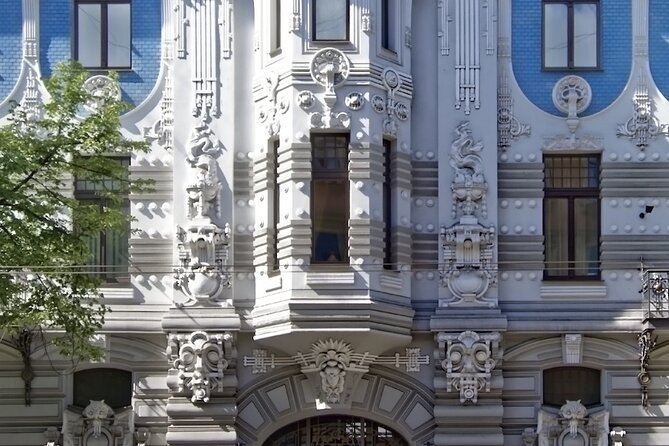
The stop at Alberta 13 helps broaden the story beyond the most flamboyant facades. The tour explains how Riga’s architects developed a local style known as National Romanticism.
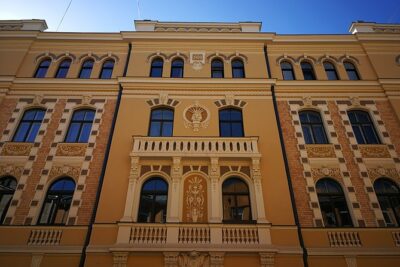
This shift is important. Art nouveau in Riga was not simply a foreign fashion copied without change. Local architects adapted the broader style and developed buildings with a stronger sense of Latvian character. National Romanticism can feel more restrained and grounded than the most heavily decorated examples, with a greater emphasis on solid forms and local identity.
The route uses this contrast well. After seeing ornate work associated with Mikhail Eisenstein, you are ready to notice that Riga’s architectural story includes quieter variations. The city’s art nouveau district becomes more interesting when you stop asking which building is the most decorated and start asking what each architect was trying to express.
This is also the point where the tour offers more than a collection of attractive streets. It connects architecture to politics, culture, and the way a city presents its identity. One published comment described the narration as a clear, passionate story about history and politics. That is a useful description of the tour’s broader aim: the buildings are the subject, but the context gives them weight.
Finishing at Alberta 12
The tour ends at Alberta 12, still in Riga’s central art nouveau district. Ending nearby keeps the route compact and leaves you well placed to continue exploring the area on your own.
The final stop gives the route a natural finish. By this point, you have seen several buildings connected with Riga’s best-known architectural period, followed the work of Mikhail Eisenstein, and learned how National Romanticism fits into the larger picture.
Do not treat the end point as a signal to put your phone away immediately. Alberta iela is the sort of street where a few extra minutes of looking can pay off. You may notice details on nearby buildings that now make more sense because the audio has trained your eye.
Since the tour ends outdoors, there is no included entrance or final indoor presentation. That keeps the experience simple and inexpensive, but you should plan any museum visit, meal, or further sightseeing separately.
What the $5.20 price really buys you
At $5.20 per person, this is a low-cost way to add structure to an independent visit. The value comes from three things: the focused route, the recorded explanations, and lifetime access through the VoiceMap app.
The offline feature is practical. You receive access to the audio, maps, and geodata, so you can prepare the route before heading out and avoid depending on a constant signal. You still need your own smartphone and headphones, neither of which is supplied.
The app also gives you access to other self-guided tours, which may make the purchase more useful if you plan to explore beyond this one route. That added access is not a reason to buy the tour by itself, but it improves the value for people who already like audio walks.
There are two limits to keep in mind. The experience is non-refundable and cannot be changed after booking, so confirm your plans before paying. Also, a low price does not mean a full-length guided tour. This is a concise introduction, not a substitute for a specialist architecture lecture or a private guide.
Who will enjoy this Riga route most
I would choose this tour if you want a quick, focused introduction to Riga’s art nouveau district and prefer to explore independently. It suits solo visitors, couples, and small groups who do not want to match a guide’s schedule.
It is also a good fit if you are under time pressure. The route takes about 30 to 45 minutes, and the central starting and ending points make it easy to place between other plans. The clear explanations help you get more from a short visit than you might from a casual walk past the buildings.
Families and mixed-interest groups may also find the format useful because you can pause when needed. At the same time, people who want live questions, spontaneous stories, or a personal relationship with a guide may find the experience too limited.
Most people can participate, and the route is near public transportation. The description does not provide specific information about street surfaces, step-free access, or seating, so you should check those details separately if they affect your plans.
Should you book this audio tour?
Book it if you want an inexpensive way to understand Riga’s art nouveau streets without joining a scheduled group. The best reasons are the short route, the flexible pacing, the offline access, and the clear explanation of both Mikhail Eisenstein and National Romanticism.
Skip it if you strongly prefer a live guide or if you are not comfortable using an app while sightseeing. You must bring a smartphone and headphones, and the purchase is final.
For most independent visitors with 30 to 45 minutes available, $5.20 is a sensible price for a well-focused architectural introduction. It will not cover all of Riga’s 800-plus art nouveau buildings, but it gives you the tools to look at the rest of the city with a sharper eye.
FAQ
Where does the tour start?
It starts at the Latvian National Museum of Art, Jaņa Rozentāla laukums 1, in Riga’s central district.
Where does the tour end?
The tour ends at Alberta iela 12, in the same central art nouveau area.
How long does the audio tour take?
The estimated duration is 30 to 45 minutes.
How much does the tour cost?
The listed price is $5.20 per person.
Is the tour guided in person?
No. It is a self-guided audio tour accessed through the VoiceMap app.
What language is available?
The tour includes lifetime access in English.
Do I need an internet connection during the tour?
The audio, maps, and geodata are available offline through the app.
Are museum tickets included?
No. Tickets and entrance fees for museums or other attractions are not included.
What do I need to bring?
You need your own smartphone and headphones. Transportation and food or drinks are also not included.
More Self-Guided Tours in Riga
- Riga: Evening or Sunset Boat Tour with Drink and Audio Guide
★ 4.0 · 10 reviews - Riga Canal and Daugava Boat Tour with Welcome Drink & Audio Guide
★ 4.5 · 9 reviews
Just added in Riga
- Tour from Riga to Vilnius: Bauska Castle, Rundale Palace and The Hill of Crosses★ 5.0 · 3 reviews
- Ultimate Art Nouveau Experience in Riga – Private Tour★ 5.0 · 4 reviews
- Group Tour: Sigulda and Turaida from Riga.★ 4.5 · 3 reviews
- Riga Medieval Dinner★ 4.0 · 4 reviews
- Fun Walk Private Tour Around Central Market Riga★ 4.5 · 3 reviews
- Private Snowmobile or ATV Safari with Riga Black Balsam Tasting★ 5.0 · 4 reviews
- Latvia’s Switzerland and Gauja National Park Tour★ 5.0 · 3 reviews
- Hiking Adventure in Gauja National Park – 7 Days★ 5.0 · 3 reviews
Art Nouveau Tours, compared.
Ultimate Art Nouveau Experience in Riga – Private Tour
Read our review →Browse the lists this tour appears in