
Reviewed · LATVIA TOURS
Riga Jewish History Tour
The most powerful part of this Riga tour is the contrast. You begin among elegant Art Nouveau buildings linked to Jewish life, then follow the story toward the Riga Ghetto, the Great Choral Synagogue memorial, and the killing grounds at Rumbula Forest. Riga’s Jewish past is both cultural and painful, and the tour does not separate those two sides.
I like the private format because you can ask Armands questions without holding back the rest of a group. I also like the way the route connects ordinary city streets with places of remembrance, including the Latvian Holocaust Museum and Peitavas Street Synagogue.
The main consideration is emotional: this is a serious tour, not a light sightseeing outing. The schedule is listed at 3 to 4 hours, but time can run longer if you want to talk and spend more time at the memorials. You should also budget for the required synagogue donation and the €5 museum donation.
Key points to know before booking
- Private tour with Armands: Your group travels alone, so the pace and questions can be adjusted along the way.
- Six meaningful stops: The route covers Art Nouveau Riga, the former ghetto area, two Holocaust memorial sites, the museum, and the synagogue.
- Rumbula Forest takes an hour: This is the longest stop and one of the most solemn parts of the morning.
- Private transportation is included: Pickup is offered, though the vehicle cannot park inside Old Riga.
- Extra donations are required: Plan for €5 per person at the Holocaust Museum plus a donation at the synagogue.
- Saturday may affect the route: The synagogue and some other places may be closed for Shabbat, but Armands can adjust the order or substitute another point of interest.
Why this tour matters in Riga
Riga is often introduced through its Art Nouveau streets, grand boulevards, and medieval Old Town. Those sights are worth your time, but they can leave out the people and communities that shaped the city. This tour gives Jewish Riga a clear place in the story.
You begin with architecture and public life. You then move into the former ghetto area, where many buildings remain much as they were roughly 80 years ago. Finally, the route turns toward persecution, murder, memory, and the small Jewish community that survived.
That structure is useful because it avoids presenting Jewish history only through the Holocaust. You see Jewish cultural and intellectual contributions first, then learn how war and Nazi occupation destroyed much of that life.
The tour is offered in English and uses private transport. That matters in Riga, since the stops are spread across different parts of the city and beyond the central sightseeing zone. Rather than working out several taxi rides or public transport connections, you can focus on the places themselves.
A few more tours worth a look in Riga
- Cesis: Medieval Heritage and Natural Treasures
★ 4.0 · 4 reviews - All Inclusive Honest History Tour – Āraiši, Cēsis, Līgatne, Sigulda
★ 5.0 · 3 reviews - Riga’s Architecture: A self-guided audio tour of the city’s art nouveau history
★ 5.0 · 3 reviews
Art Nouveau Riga and Mikhail Eisenstein’s legacy
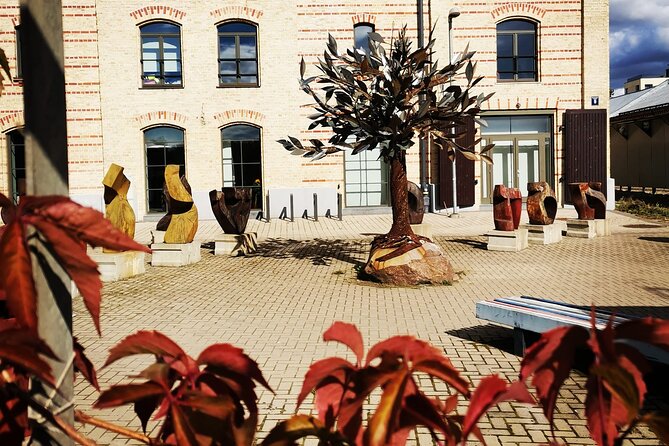
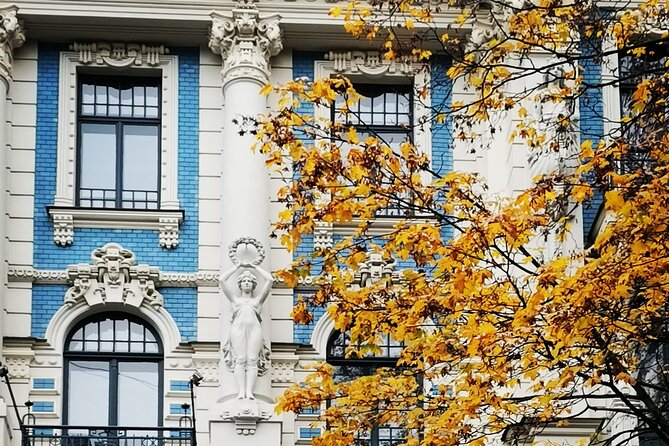
The first stop lasts about 30 minutes and looks at Art Nouveau Riga. Several buildings in this area were designed by Jewish architect Mikhail Eisenstein, whose work helps show how Jewish residents contributed to the city’s architecture and public identity.
This is also where philosopher Isaiah Berlin was born in one of the buildings. That small detail adds a human connection to streets that might otherwise seem like a collection of handsome façades.
You can take photographs here, but the guide’s context is the useful part. Without it, Art Nouveau Riga is easy to treat as a style exercise: decorative fronts, elaborate details, and grand urban design. With the Jewish connection, you begin to see the neighborhood as part of a wider story about education, culture, professional life, and belonging.
Admission is free, and the stop is short. If architecture is a major interest, you may wish you had more time to study the buildings. The private format helps, since you can ask Armands to explain a particular façade or linger briefly for photos.
Latgale Suburb and the former Riga Ghetto
The tour then moves to the Latgale Suburb, a former territory of the Riga Jewish Ghetto. The appeal here is not polished scenery. It is the physical setting and the sense of continuity in the buildings.
Many structures remain in much the same condition as they were during the Second World War. That can make the past feel less distant than it does in a museum. Streets and buildings are not simply background scenery here. They help you understand the cramped urban environment in which people were confined.
I would pay close attention to Armands’ explanation at this stop, since the significance may not be obvious from the buildings alone. The stop lasts about 30 minutes and admission is free.
This part of the route may feel less visually dramatic than Art Nouveau Riga. That is also its value. You are not being shown a restored attraction designed for easy viewing. You are seeing an ordinary part of Riga connected to an extraordinary and terrible period.
The Great Choral Synagogue memorial
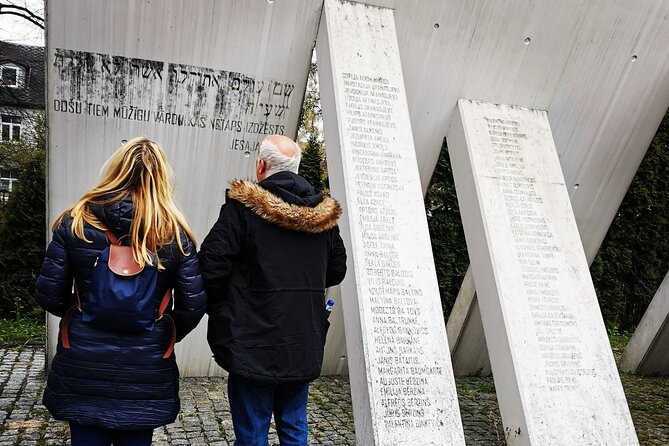
The memorial to the Great Choral Synagogue is a short stop, about 15 minutes, but the story is difficult to forget. On July 4, 1941, more than 300 Jewish refugees from Lithuania and local Latvian Jews were forced into the synagogue basement. The building was then deliberately burned.
A memorial now marks the site. You will not spend long here, yet the stop gives the tour a sharp emotional turn. The earlier architecture stop showed Jewish achievement and urban life. This place shows how quickly that life was attacked.
The brief timing is appropriate for a memorial. You have time to hear the account, look at the site, and reflect without turning the visit into a rushed checklist. Still, this is one place where a quiet pause may matter more than a long explanation.
Same city, a different sort of afternoon:
- Riga Old Town walking tour
★ 4.5 · 304 reviews - Latvian food tasting tour at Riga Central market
★ 4.5 · 241 reviews - 2 countries! Hill of Crosses, Rundale Palace and Bauska castle
★ 5.0 · 225 reviews - Discover Riga Bike Tour
★ 5.0 · 166 reviews
Rumbula Forest, the tour’s most solemn hour
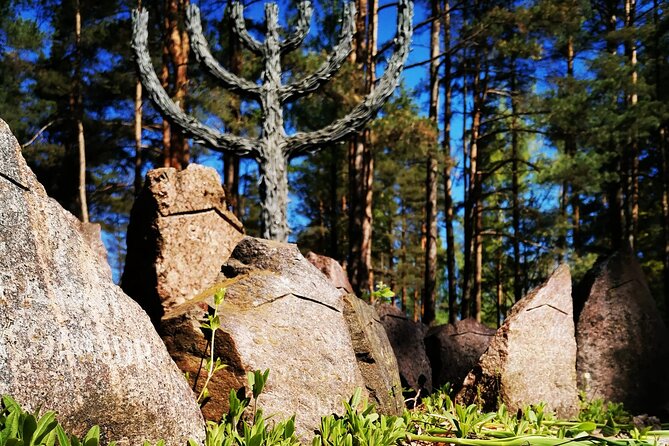
The visit to Rumbula Forest lasts about one hour, making it the longest stop on the route. In November 1941, Nazi authorities decided to destroy the Riga Ghetto. During killings on November 30 and December 8, more than 25,000 people were murdered in the forest, including about 1,000 Jews deported from Germany.
A complete memorial opened on November 29, 2002. Its setting away from the city gives this stop a different feel from the urban memorials. You are not looking at a building that has been absorbed into daily city life. You are visiting a place tied directly to mass murder.
Expect this to be the quietest and most emotionally demanding part of the morning. The hour allows time to take in the memorial and listen to the history without being hurried. I would not plan another intense activity immediately afterward if you prefer time to process what you have seen.
The tour handles difficult material directly, but the guide’s role is important here. Past comments describe Armands as tactful, courteous, and willing to answer questions. One useful quality is his honesty when he does not know an answer. That is better than filling a serious subject with guesses.
The Riga Ghetto and Latvian Holocaust Museum
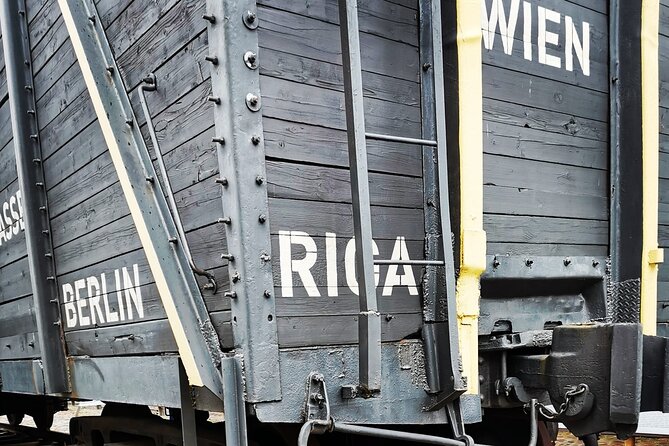
The museum gives you a more focused setting for the story of Riga’s Jewish community. Its subjects include Jewish life in Latvia before the Holocaust, the history of the Riga Ghetto, and the Holocaust in Latvia.
This stop lasts about 30 minutes. You should allow an additional €5 donation per person. The museum is a good place to connect the sites you have already seen, especially if the buildings and memorials have raised questions that need more background.
The museum also helps keep the tour from becoming only a story of destruction. Learning about life before the Holocaust gives the community a fuller presence. You are reminded that the people killed were not simply numbers at a memorial. They had families, professions, religious lives, homes, and connections to Riga.
Thirty minutes is enough for a focused visit, but not enough to inspect every display at length. If you read slowly or want to spend a long time with museum material, speak with Armands about timing. The tour is private, and its flexible pace is one of its better features.
Peitavas Street Synagogue and Jewish life today
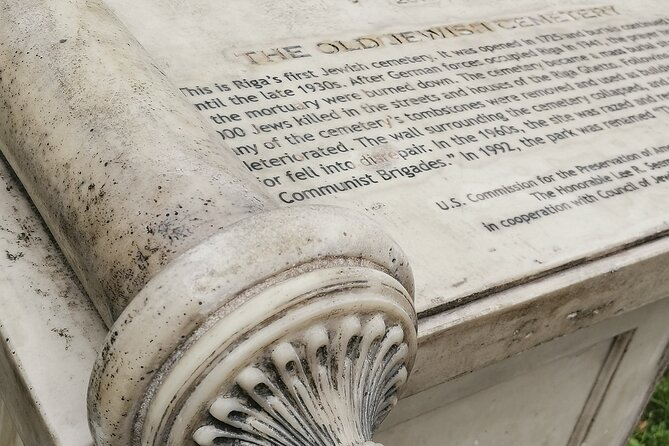
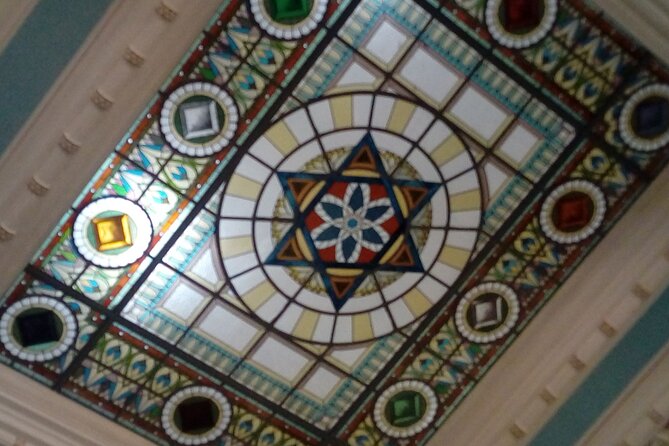
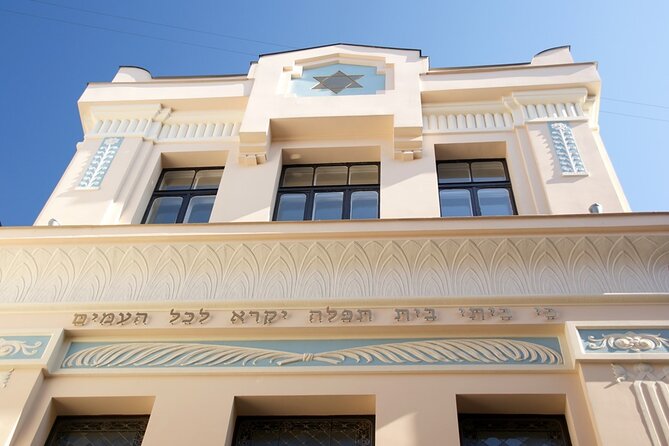
The final listed stop is Riga Synagogue on Peitavas Street, a significant cultural monument and one of the city’s Art Nouveau landmarks. Built from 1903 to 1905, it was designed in the Art Nouveau style with Ancient Egyptian motifs.
This stop lasts about 45 minutes, giving you more time than the first architecture visit. The synagogue adds a living religious and cultural dimension to the tour. After seeing former Jewish neighborhoods and Holocaust memorials, you finish with a place connected to Jewish worship and continuity.
A donation at the synagogue is required and is not included in the tour price. The dress code is simple: any normal clothing is acceptable, and a kipa is provided if your head is not already covered by a cap, hat, scarf, or other covering.
Pay attention to the day you book. Saturday is Shabbat, and some places may be closed. Armands has adjusted the route for Saturday bookings, taking groups to another point of interest when needed. That flexibility is useful, but you should not assume every stop will operate in exactly the same way on every day.
What the private format adds
The price is $96.33 per person. That is not the lowest-cost way to see Riga, but the value depends on how much you want from the subject.
You are paying for private transportation, an English-speaking guide, and a route that links six locations spread around the city and its outskirts. A private vehicle also makes the Rumbula Forest visit practical without arranging separate transport.
The strongest value is the personal discussion. You can ask about architecture, religious life, Latvia during the war, the ghetto, or the memorials without waiting for a group to move on. If your interest is family history or Jewish heritage, that freedom may matter more than saving a little money.
Group discounts are offered, which could make the cost easier to justify for families or friends traveling together. The tour is also suitable for most participants, according to the available details.
The cost is not fully all-inclusive. Add the €5 museum donation and a synagogue donation. The amount of the synagogue donation is not specified, so bring some additional money for the visit.
Timing, pickup, and practical details
The tour starts at 9:00 am and lasts roughly 3 to 4 hours. Pickup is offered from your hotel or apartment, but the vehicle cannot park in Old Riga. You should wait outside the property at the agreed pickup point rather than expecting the vehicle to enter the historic center.
That small detail can prevent a frustrating start. If your accommodation is inside Old Riga, confirm exactly where you should meet the guide.
The experience is private, and only your group participates. A mobile ticket is accepted, and confirmation arrives when you book. Free cancellation is available if you cancel at least 24 hours before the local start time. Changes or cancellations inside that period are not accepted for a refund.
The pace can be flexible. Armands has spent extra time at stops when a group wanted to ask more questions or explore longer. That is helpful, but it also means you should avoid booking another fixed activity too close to the scheduled finish.
The tone is serious and respectful. Wear ordinary clothing, and remember that a kipa is provided for the synagogue if needed. No special dress code is required beyond being appropriately clothed.
Who will get the most from this tour
I would choose this tour if you want Jewish Riga explained as a complete story rather than as a single Holocaust memorial visit. It suits you especially well if you care about architecture, family history, religious heritage, or the way war changed a city.
The private setup is a strong match for curious people who ask many questions. It is also useful for relatives traveling together, since different members of your group may want to focus on architecture, genealogy, Latvia during the war, or present-day Jewish life.
This may not be your best choice if you want a cheerful morning of general sightseeing. Several stops are memorials, and Rumbula Forest in particular calls for quiet attention. The tour is also less suitable if you prefer a large group with a fixed, tightly timed program.
The available feedback gives Armands high marks for clear explanations, patience, honesty, and flexibility. Those qualities matter more here than a polished performance. The subject calls for care, accuracy, and room for questions.
Should you book the Riga Jewish History Tour?
Book it if you want to understand how Jewish life shaped Riga, how that community was destroyed during the Holocaust, and how the city remembers it today. The Art Nouveau buildings, former ghetto streets, Great Choral Synagogue memorial, Rumbula Forest, museum, and Peitavas Street Synagogue form a strong route.
At $96.33 per person, the tour makes the most sense when private transport and personal guiding are important to you. Remember the extra donations, allow flexibility beyond the stated 3 to 4 hours, and check your date if you are visiting on Saturday.
I would choose this experience for a first serious look at Riga’s Jewish past. It is thoughtful, direct, and better suited to reflection than quick sightseeing.
FAQ
How much does the Riga Jewish History Tour cost?
The listed price is $96.33 per person. Group discounts are offered.
How long does the tour last?
The tour lasts approximately 3 to 4 hours. It may run longer if you spend extra time at the stops or ask for extended discussion.
What time does the tour begin?
The scheduled start time is 9:00 am.
Is hotel pickup available?
Yes. Pickup is offered from your hotel or apartment. The vehicle cannot park inside Old Riga, so you should wait outside the property.
Is this a private tour?
Yes. Only your group participates in the activity.
What language is the tour offered in?
The tour is offered in English.
What is included in the price?
Private transportation and guide services are included.
Are any costs not included?
Yes. You must provide a donation at the synagogue, and the Riga Holocaust Museum requests a €5 donation per person.
What should I wear to the synagogue?
There is no special dress code beyond being clothed normally. A kipa is provided if your head is not covered by a cap, hat, scarf, or another covering.
Can I cancel the tour for a refund?
Yes, if you cancel at least 24 hours before the local start time. Cancellations or changes made less than 24 hours before the start are not accepted for a refund.
Just added in Riga
- Ultimate Art Nouveau Experience in Riga – Private Tour★ 5.0 · 4 reviews
- Tour from Riga to Vilnius: Bauska Castle, Rundale Palace and The Hill of Crosses★ 5.0 · 3 reviews
- Group Tour: Sigulda and Turaida from Riga.★ 4.5 · 3 reviews
- Fun Walk Private Tour Around Central Market Riga★ 4.5 · 3 reviews
- Riga Medieval Dinner★ 4.0 · 4 reviews
- Latvia’s Switzerland and Gauja National Park Tour★ 5.0 · 3 reviews
- Hiking Adventure in Gauja National Park – 7 Days★ 5.0 · 3 reviews
- Private Snowmobile or ATV Safari with Riga Black Balsam Tasting★ 5.0 · 4 reviews
Latvia Tours, compared.
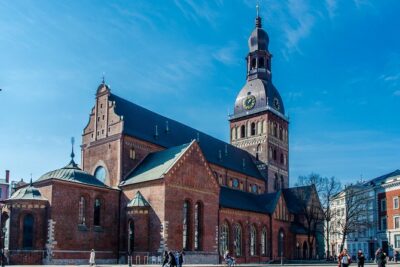

Latvian food tasting tour at Riga Central market
Read our review →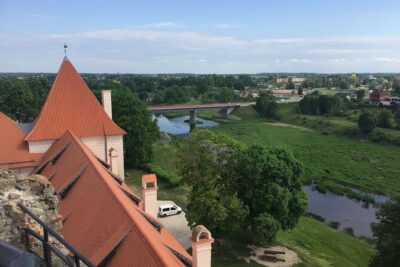
2 countries! Hill of Crosses, Rundale Palace and Bauska castle
Read our review →
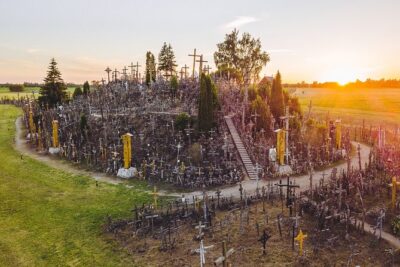
Riga Gun Range: shooting with Winchester, Glock17, & Kalashnikov
Read our review →
Best of Riga Walking Tour – Highlights and Hidden Gems
Read our review →
Browse the lists this tour appears in