
Reviewed · PRIVATE
Private Soviet Riga tour
Riga’s Soviet past is not tucked away in one museum. It is spread across squares, monuments, churches, apartment blocks, hotels, and one grim former KGB headquarters. This private walk connects those places into a clear story, from Stalin’s rule to Latvia’s independence in 1991. Guide Edvards brings strong personal feeling to the subject and explains difficult events in plain language.
I like the private format, since your group can stop to ask questions instead of following a fixed script. I also like the route’s range: deportations, religion, Soviet architecture, surveillance, fashion, and the peaceful Baltic Way all get a place. The main drawback is the pace. Ten stops in about two hours means this is mainly an outdoor history walk, not a series of long visits inside buildings.
Key points to know before you book
- A personal guide named Edvards: He explains Soviet Riga through family experience as well as wider Latvian history.
- A walk through two major eras: You move from Soviet control and repression to the 1991 independence movement.
- The KGB building is a powerful stop: Expect discussion of recruitment, interrogation, surveillance, and the fear linked to the site.
- The Baltic Way gets proper attention: The tour covers how the huge peaceful protest was organized and why it mattered.
- Private value for small groups: The $180.62 price covers up to 15 people, so the per-person cost drops sharply with a larger party.
- A useful Old Town finish: The walk ends at Dailes Theatre, about 15 minutes on foot from Riga’s Old Town.
Riga’s Soviet story begins at the Red Riflemen Square
Meet at Latviešu strēlnieku laukums, near the Museum of the Occupation of Latvia. This opening stop sets up the broad story, covering the different Soviet periods from Stalin to Gorbachev.
The square’s monument to the Latvian Red Riflemen gives Edvards a way to explain how symbols can carry more than one meaning. The Latvian riflemen were tied to the revolutionary period, and their monument connects Latvia to the wider Soviet story. You will also consider how Soviet cultural heritage was presented, remembered, and argued over.
Allow about 15 minutes here. It is a useful start because you first get the political framework before moving into the human cost of Soviet rule. If you know little about Latvia’s twentieth century, pay close attention to the timeline. It will help you make sense of every later stop.
More Soviet-era history tours in Riga
- Visit of Salaspils Memorial Ensemble
★ 5.0 · 10 reviews - Private Day Tour to Sigulda, Turaida Castle and Soviet Bunker
★ 4.5 · 8 reviews - Full-Day Private Trip to Nuclear Missile Base and Secret Soviet Bunker
★ 4.5 · 7 reviews
Deportations and the weight of Siberia
The next stop is the Museum of the Occupation of Latvia. The tour focuses on deportations to Siberia: why they happened, the scale of the removals, and how they affected Latvian families and society.
The museum itself is not listed as an included indoor visit, and the stop is scheduled for about 10 minutes. That matters. You should expect a guided explanation outside or near the museum rather than time to explore its exhibits. If you want to visit the museum properly, plan a separate visit.
This part gives the walk its emotional center. Soviet rule was not only about official buildings and changing street names. It also meant forced removal, broken families, and fear that reached into ordinary homes. Edvards is particularly effective when connecting large political events to personal experience, which helps keep this section human rather than merely chronological.
The 1991 barricades and Latvia’s independence struggle
At 1991 Barikazu Laukums, the focus shifts to the final fight for independence. The era of the barricades was the climax of Latvia’s push to break away from Soviet control.
You will hear how this period looked and felt on the ground, not just the date when independence was restored. The stop lasts roughly 10 minutes, so expect a compact account rather than a long lecture. The private setup helps here. You can ask Edvards to clarify the political changes, the public mood, or the role of ordinary people.
This is one of the most useful parts of the walk because it shows that Latvia’s independence was not simply handed back after the Soviet Union weakened. It was defended through public action, political pressure, and the willingness of people to gather in dangerous conditions.
The Baltic Way, explained from a practical angle
At the Baltic Way Footprint Monument, you learn about the largest nonviolent anti-Soviet demonstration in the Baltic states. The event linked people across Latvia, Estonia, and Lithuania in a human chain.
The strength of this stop is its practical detail. Edvards covers the logistics, the mood at the time, and the political effect. You are not left with only a symbolic image of people holding hands. You get a sense of the planning needed to organize a demonstration across three countries and the courage required to take part.
The stop lasts about 10 minutes. That is enough for a clear explanation, but not enough for every detail of the wider independence movement. Still, it provides one of the walk’s most memorable contrasts: the Soviet system relied on force and surveillance, while the Baltic independence movement made its case through mass public unity.
A few more tours worth a look in Riga
- Private Riga Old Town Walking Tour
★ 5.0 · 62 reviews - Private Full-Day Trip to Turaida, Sigulda, and Cesis
★ 4.5 · 52 reviews - Ultimate Husky dog sledding experience in Latvia – Private tour from Riga
★ 4.5 · 45 reviews - Private trip – Hill of Crosses / 2 countries in 1 day
★ 5.0 · 44 reviews
The Freedom Monument and a symbol that survived
Riga’s Freedom Monument is one of the city’s most important landmarks. Here, Edvards explains its meaning and how it survived the Soviet period.
This is a good place to see how public monuments can become political statements. The monument’s survival was not an accident in the eyes of people who attached national meaning to it. During Soviet rule, the site remained a visible reminder of Latvian identity, even as the political system around it tried to reshape public life.
The stop takes about 10 minutes. You will have time to look closely, hear the explanation, and connect the monument with the barricades and the Baltic Way. I like the order of these stops. The tour moves from organized resistance to the enduring national symbol at the heart of Riga.
Religion under Soviet rule at the Orthodox cathedral
At the Nativity of Christ Cathedral, the subject changes from public protest to religion. Edvards discusses the role of faith during the Soviet period and the way religious institutions and believers were treated.
The cathedral is especially useful for showing that Soviet life was not only about communist politics. The regime also had an official attitude toward religion, and that policy affected churches, worship, and public identity. The stop does not promise a long interior visit, so think of it as a historical explanation tied to the building outside you.
With about 10 minutes here, you will get a focused account rather than a full architectural tour. That is appropriate for this walk. The building is a setting for the story, not the entire subject.
Hotel Latvia, Western visitors, and KGB surveillance
The former Hotel Latvia, now the Radisson Blu Latvija Conference & Spa Hotel, offers one of the route’s most unusual details. In Soviet Riga, it was the only hotel where Western tourists were allowed to stay. Its rooms were famously bugged by the KGB.
That fact makes the hotel more than a piece of modern city scenery. It shows how closely the Soviet state watched foreign visitors and controlled contact between the outside world and Latvian society. A hotel could be a place to sleep, but it could also be a surveillance site.
Edvards uses the stop to discuss the relationship between Western visitors, the Soviet authorities, and the security service. You will spend about 10 minutes here. Do not expect access to old bugged rooms or a hotel tour. The value is in understanding what the building represented.
Brivibas Iela, from Lenin Street to everyday Soviet life
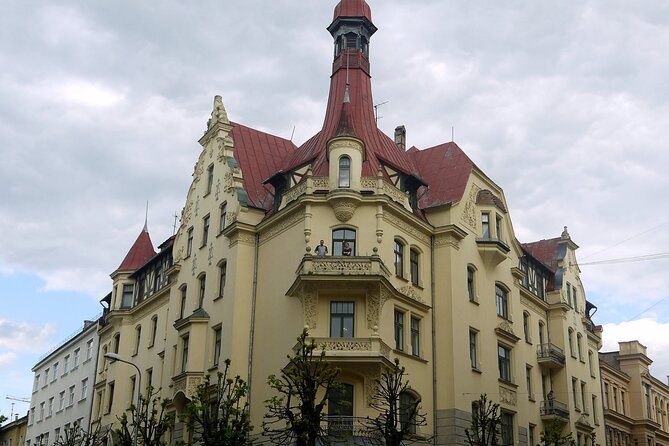
The walk continues along Brivibas Iela, or Freedom Street. During the Soviet period it was known as Lenin Street. The name change alone captures the political shift that runs through the whole tour.
This section looks at ordinary urban life. You will see examples of Soviet-era residential architecture and hear about Riga’s best-known fashion house, Rigas Modes. That combination is useful. It places housing, clothing, commerce, and public identity alongside the grand political events.
I especially like this kind of stop because it gives you something to notice after the tour ends. Soviet history is not only found at monuments or official headquarters. It can appear in the shape of apartment buildings, street names, and businesses that served local people under a very different system.
The walk between stops also gives you time to ask questions. The private format is valuable here, since Edvards can adjust the discussion to your interests instead of moving a large group along.
The KGB building, the tour’s darkest address
The former KGB building is likely to be the most sobering stop. It was the headquarters of the Soviet secret police in Latvia, and Edvards discusses recruitment methods, interrogation methods, and the role of the building in the wider system of control.
The description of the building as Riga’s highest point, with the grim claim that from its top you could see all the way to Siberia, underlines the dark symbolism attached to the site. The real value, though, is the discussion of how intelligence and security services operated. This is where earlier themes, including deportation, surveillance, and fear, come together.
The stop lasts about 10 minutes. You should not assume that the tour includes an indoor visit to the building. The experience is a guided outdoor discussion connected to the place itself. If you are sensitive to accounts of repression, this section may feel heavy, but it is also one of the clearest explanations of what Soviet power meant in daily life.
Dailes Theatre and the end of the Soviet Union
The final stop is Dailes Theatre on Brivibas iela. The theatre is an important example of Soviet-era architecture, and Edvards uses it to discuss the collapse of the Soviet Union.
Ending here makes sense. The walk begins with early Soviet history and finishes with the system falling apart. The theatre gives you a final building to read through that political lens, while the surrounding street connects back to the discussion of Lenin Street, Soviet housing, and modern Riga.
The scheduled time is about 15 minutes, making this one of the longer stops. The tour ends here, not back in the Old Town. From Dailes Theatre, you have about a 15-minute walk to the Old Town, so you can continue sightseeing, find a meal, or return to your hotel by public transport.
Is $180.62 good value for a private two-hour walk?
The price is $180.62 per group of up to 15 people. For one or two people, that is a serious spend for a two-hour tour. For a family or group of friends, the calculation changes quickly. Six people would pay about $30 each, while 10 people would pay about $18 each, before any currency conversion.
You are paying for a professional guide, local taxes, and a private experience. The main value is not entrance tickets, since the listed stops are free and the tour does not include hotel pickup or drop-off. You are paying for the route, the explanations, the questions you can ask, and the connection between places that could otherwise feel unrelated.
The tour is best value for people who care about twentieth-century history and want a focused introduction without committing to a full museum visit. If you are mainly looking for interiors, photographs, or general sightseeing, the price may feel high. If you want context and a conversation with a guide, it makes more sense.
Timing, walking, and who should book
The walk lasts about two hours and includes 10 stops. The listed stop times add up to roughly 105 minutes, leaving limited time for walking between locations and handling questions. You should wear comfortable shoes and be ready to stay outdoors for most of the experience.
The tour is offered in English. It is private, so only your group participates. Children must be accompanied by an adult, and most people can take part. Service animals are allowed, and the route is near public transportation.
I would book this early if your schedule is fixed. It is often reserved well ahead of the date, and confirmation arrives within 48 hours, subject to availability. Free cancellation is available until 24 hours before the start time. After that point, the payment is not refunded and changes are not accepted.
This walk suits:
- First-time visitors who want a clear introduction to Latvia’s Soviet past.
- Families or friend groups that can share the private cost.
- Visitors who prefer questions and conversation over a large group lecture.
- People interested in the Baltic Way, the 1991 barricades, or KGB surveillance.
- Anyone who wants to see Soviet-era places beyond the central sightseeing circuit.
It may not suit you if you need a slow pace, long indoor visits, or a general overview of Riga that also covers medieval and Art Nouveau history. This is a focused political and social history walk.
My call: book it for context, not for sightseeing checklists
I would book the Private Soviet Riga Tour if you want to understand how Latvia moved from Soviet control to restored independence. The route covers the major themes well, and Edvards appears to make the material personal without losing the wider political picture.
The strongest reasons to choose it are the private questions, the family-based perspective, and the range of places. You move from the Red Riflemen and deportations to the Baltic Way, the Freedom Monument, the KGB building, and the final collapse of the Soviet Union.
Before booking, be clear about the format. This is a brisk outdoor walk with discussion at buildings and monuments. It is not a ticketed museum tour, a hotel transfer, or a relaxed sightseeing stroll. For the right audience, that focus is exactly what makes the tour worthwhile.
FAQ
How long does the Private Soviet Riga Tour last?
The tour lasts approximately two hours.
Where does the tour begin?
It begins at Latviešu strēlnieku laukums in Riga’s Centra rajons.
Where does the tour finish?
It finishes at Dailes Theatre, at Brīvības iela 75. The theatre is about a 15-minute walk from Riga’s Old Town.
Is the tour private?
Yes. Only your group participates, with up to 15 people covered by the group price.
What language is the tour offered in?
The tour is offered in English.
Does the price include hotel pickup and drop-off?
No. Hotel pickup and drop-off are not included.
Can I cancel for a full refund?
Yes, if you cancel at least 24 hours before the experience start time. Cancellations made less than 24 hours before the start time are not refunded.
Just added in Riga
- Tour from Riga to Vilnius: Bauska Castle, Rundale Palace and The Hill of Crosses★ 5.0 · 3 reviews
- Ultimate Art Nouveau Experience in Riga – Private Tour★ 5.0 · 4 reviews
- Group Tour: Sigulda and Turaida from Riga.★ 4.5 · 3 reviews
- Fun Walk Private Tour Around Central Market Riga★ 4.5 · 3 reviews
- Riga Medieval Dinner★ 4.0 · 4 reviews
- Private Snowmobile or ATV Safari with Riga Black Balsam Tasting★ 5.0 · 4 reviews
- Latvia’s Switzerland and Gauja National Park Tour★ 5.0 · 3 reviews
- Hiking Adventure in Gauja National Park – 7 Days★ 5.0 · 3 reviews
Private, compared.

Ultimate Husky dog sledding experience in Latvia – Private tour from Riga
Read our review →
Private trip – Hill of Crosses / 2 countries in 1 day
Read our review →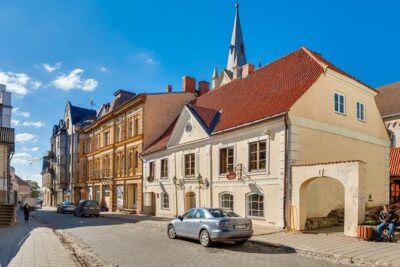
Full-Day Private Trip to Cesis, Sigulda and Turaida from Riga
Read our review →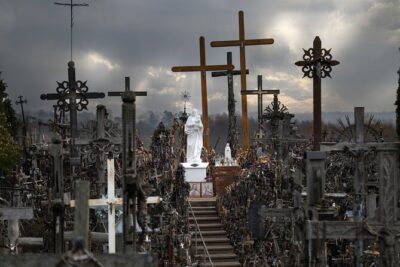
Private Full-Day Trip to Hill of Crosses, Rundale Palace & Bauska
Read our review →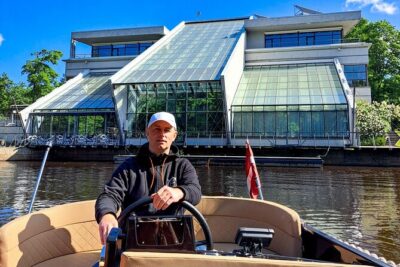
Private Boat Tour experience in Riga (City Canal and Daugava)
Read our review →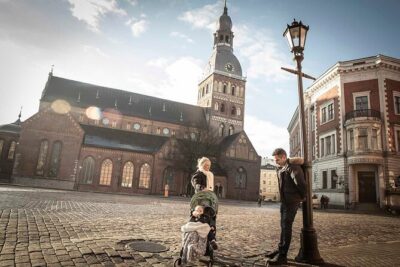
Browse the lists this tour appears in